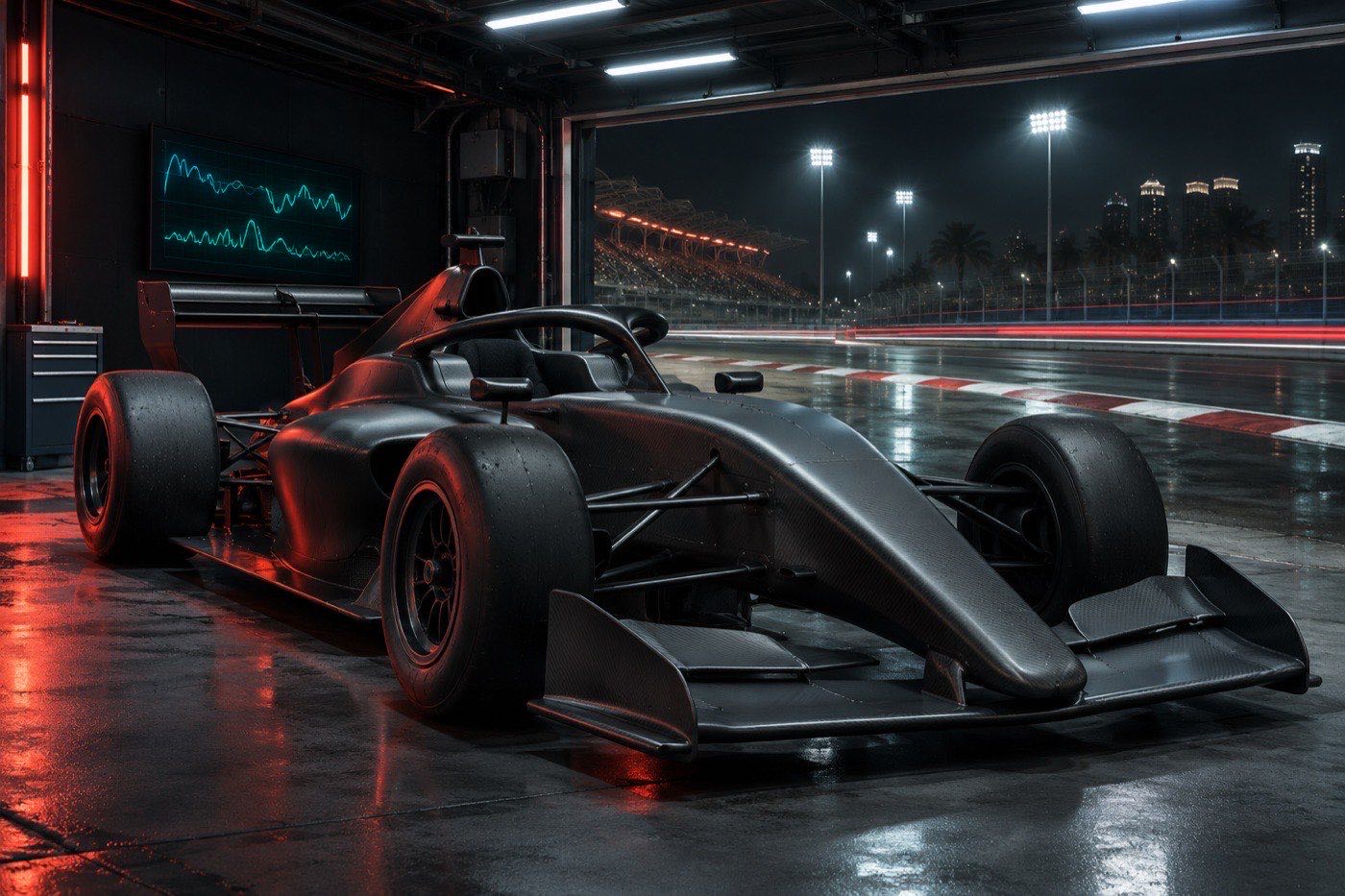
Formula 3 Car Specs: Engine, Top Speed and Safety
Formula 3 car specs in plain words: a 3.4 litre V6 with 380 hp, a top speed around 300 km/h, cornering forces up to 2.6 G and a halo over the cockpit. Here is how the car is built and why it matters on the way to Formula 1.
What a Formula 3 car is
A Formula 3 car is an open-wheel single-seater: one seat, wheels outside the bodywork, wings at the front and rear. In FIA Formula 3, the international series that races on Formula 1 weekends, every team uses the same car. The chassis is built by the Italian constructor Dallara, the engine comes from Mecachrome and the tyres from Pirelli. Teams can adjust the set-up, but they cannot design their own parts.
That single-make approach is deliberate. Formula 3 is meant to test drivers and engineers, not the size of a team's development budget. A new generation of the car, the Dallara F3 2025, made its race debut in 2025 and replaced the car introduced in 2019. It kept the same engine.
Formula 3 car engine and horsepower
The Formula 3 car engine is a bespoke Mecachrome six-cylinder unit of 3.4 litres. It is naturally aspirated, which means no turbocharger, and FIA Formula 3 rates it at 380 hp at 8,000 rpm. Power goes to the rear wheels through a six-speed gearbox operated by paddles on the steering wheel.
For comparison, Formula 2 uses a 3.4 litre V6 from the same manufacturer, but with a turbocharger and 620 hp. Formula 1 uses a 1.6 litre turbocharged V6 hybrid power unit with far more total output. So the Formula 3 car horsepower figure sits between the regional cars below it and Formula 2 above it, as a training step should.
Formula 3 car top speed and g-forces
How fast does a Formula 3 car go? FIA Formula 3 quotes a top speed of 300 km/h, acceleration from 0 to 100 km/h in about 3 seconds, lateral acceleration up to 2.6 G in corners and braking deceleration up to 1.9 G. Real speeds depend on the circuit and the gearing chosen for it. On the street circuit in Macau, for example, a Formula 3 car reached around 275 km/h at the end of the long straight.
Is Formula 3 faster than F1? No. A Formula 1 car is much faster over a lap, mostly because it has far more downforce and power, and it brakes and corners harder. The gap shows most clearly in fast corners, not on the straights. The F1 vs F2 vs F3 guide compares the three in more detail.
Chassis, aero and tyres
The chassis is a carbon fibre monocoque, the strong central tub in which the driver sits and to which the engine, suspension and wings attach. The front and rear wings create downforce, pressing the car into the track so it can corner faster than its weight alone would allow. Formula 3 also uses a drag reduction system, a flap in the rear wing that the driver can open in set zones to help overtaking.
The car runs on 16-inch Pirelli tyres. Learning how a tyre warms up, how long it lasts and how it reacts to set-up changes is one of the main lessons of Formula 3, because the same skills carry straight into Formula 2 and Formula 1.
Safety: the halo and the cockpit
Above the cockpit sits the halo, a curved titanium bar that protects the driver's head from flying debris and from contact with other cars or barriers. Formula 3 adopted it with the car introduced in 2019, in line with Formula 1 and Formula 2. The cockpit itself is surrounded by energy-absorbing structures, and the car must pass FIA crash tests before it races.
The driver wears a fireproof suit, gloves and boots, a helmet built to FIA standards and a head and neck restraint. None of this is optional, and junior drivers learn the routines of getting in, getting strapped in and getting out quickly from their first single-seater races.
Are Formula 3 cars road legal
No. A Formula 3 car has no lights, no number plate, no road tyres and no ground clearance for normal roads, and it is not built to road car regulations. It runs only on closed circuits during sessions approved by the event organiser. Used Formula 3 cars do appear for sale, but they are bought for track use, club racing or display.
Regional F3 cars
The name Formula 3 is also used, informally, for Formula Regional cars, which the FIA once called regional F3. These are simpler and less powerful than FIA Formula 3 machines. One Asian regional championship that started in 2018, for example, used a Tatuus chassis with a halo and a turbocharged 1,742 cc engine of about 270 hp. Japan's Super Formula Lights, which was the Japanese Formula 3 Championship until it was renamed in 2020, uses its own Dallara chassis.
All of these cars share the same purpose: they sit on the F1 driver pathway between Formula 4 and Formula 2. If you want to see them run, our guide to race circuits in Asia lists the tracks that host junior single-seaters.
Sources: FIA Formula 3, "The car and engine"; Formula 1, "The beginner's guide to Formula 3"; FIA Formula 2 technical information.